
Denver Drug Offense Lawyers — Drug Charge Defense in Denver County
Denver’s relationship with cannabis is well known — as the state capital of legal recreational marijuana, Denver is home to hundreds of licensed dispensaries and a deeply embedded cannabis culture. But Denver’s progressive cannabis stance does not mean drug charges are handled leniently here. The Denver DA’s office actively prosecutes drug distribution, trafficking, and serious possession cases. Denver’s Drug Court provides genuine alternatives to conventional prosecution for eligible defendants. And Denver’s position at the I-25/I-70 interchange makes it a significant hub for drug trafficking cases that generate serious felony charges. Burnham Law’s Denver drug offense attorneys defend clients at every level of drug charge severity in Denver County — from possession misdemeanors to serious trafficking felonies — with the constitutional depth and local knowledge these cases require.
Meet our Denver criminal defense team below — attorneys experienced in drug offense defense throughout Denver County District Court and Denver County Court.
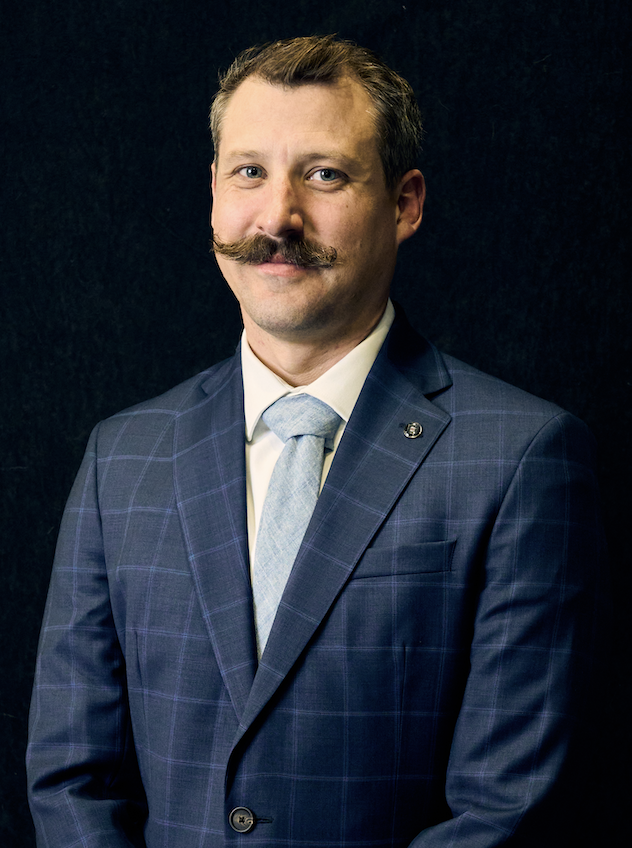
Partner - Domestic Relations and Criminal Defense
Colorado Springs
Jeremy Wooten, is a seasoned trial attorney who specializes in criminal defense and family law, leveraging a wealth of experience honed over five years at the Colorado State Public Defenders’ Office. Rising to Senior Deputy Public Defender, he successfully managed a diverse caseload, including serious charges like first-degree homicide, drug distribution, and economic crimes, always maintaining an unwavering commitment to client advocacy. Licensed in both Texas and Colorado, Jeremy's legal expertise is defined by strategic planning—meticulously crafting and executing well-thought-out trial strategies—and remarkable resourcefulness in finding innovative solutions to complex legal challenges in both the criminal and family law arenas. His practice is characterized by agile, client-centered advocacy, which relies on adaptability, active listening, and quick thinking essential for effective trial work. Jeremy prioritizes thoroughly understanding his clients' objectives and adapting his strategies dynamically to the evolving nature of trials. His resilience and strategic agility allow him to confidently navigate unexpected developments in the courtroom, ensuring each case is expertly...

Senior Associate Attorney - Domestic Relations and Criminal Defense
Colorado Springs
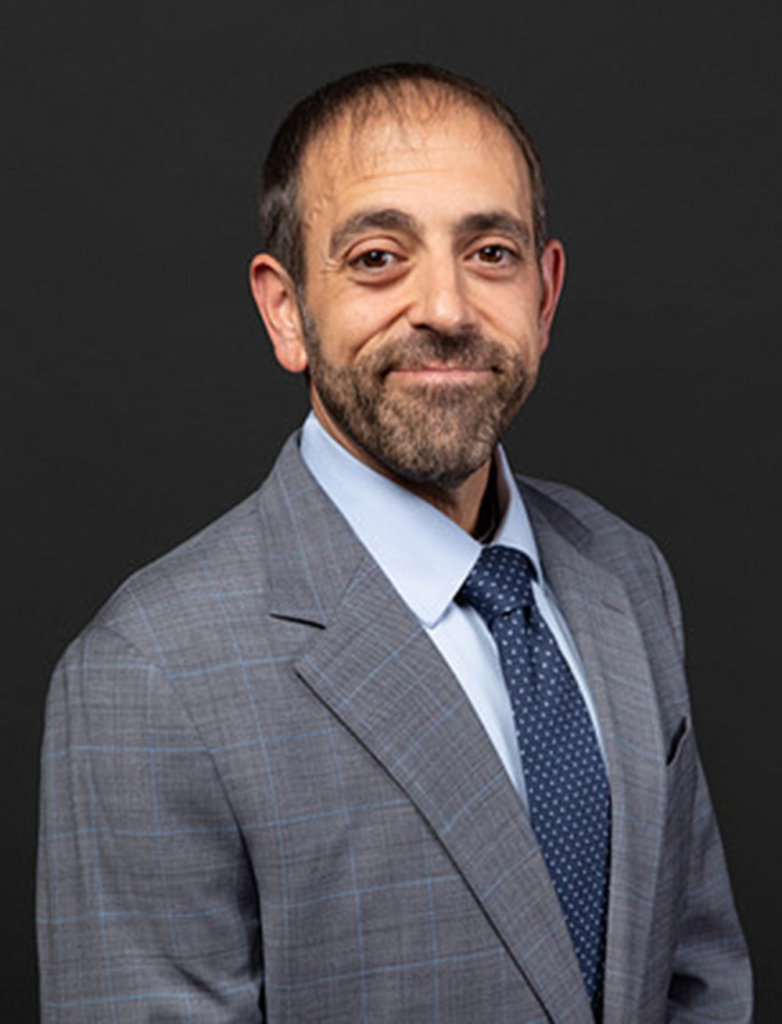
Julian Rosielle has been licensed to practice law in Colorado since 2006. Julian is a graduate of the University of Colorado School of Law, where he was on the Dean’s List and an associate editor of the University of Colorado Law Review. Julian practiced exclusively in the area of criminal law for the first thirteen years of his career and has several notable case outcomes to include not guilty verdicts on charges of homicide and assault. Julian has extensive trial experience, ranging from Death Penalty cases to misdemeanor domestic violence to driving under the influence. Beginning in 2019, Julian’s practice has expanded to include domestic relations litigation and civil protection orders. Julian has lived in Colorado since 2004 and when not in Court enjoys hiking with his family and dogs.

Associate Attorney - Civil Litigation & Criminal Defense
Centennial
Kate strives to have a client-oriented practice where she can assist her clients in all stages of litigation. Prior to joining Burnham, Kate was an associate at an AmLaw Firm where she worked on various types of complex litigation representing large corporations, municipalities, and individuals. Before going into private practice, Kate was an Assistant Public Defender in Miami-Dade County where she tried over twenty cases. Kate has been able to develop a well-rounded practice by working in both the private and public sectors. Kate has honed her skill sets from her prior experience so she can be a zealous advocate for her clients. In her spare time, Kate enjoys spending time with her husband in the outdoors, traveling, and visiting family.
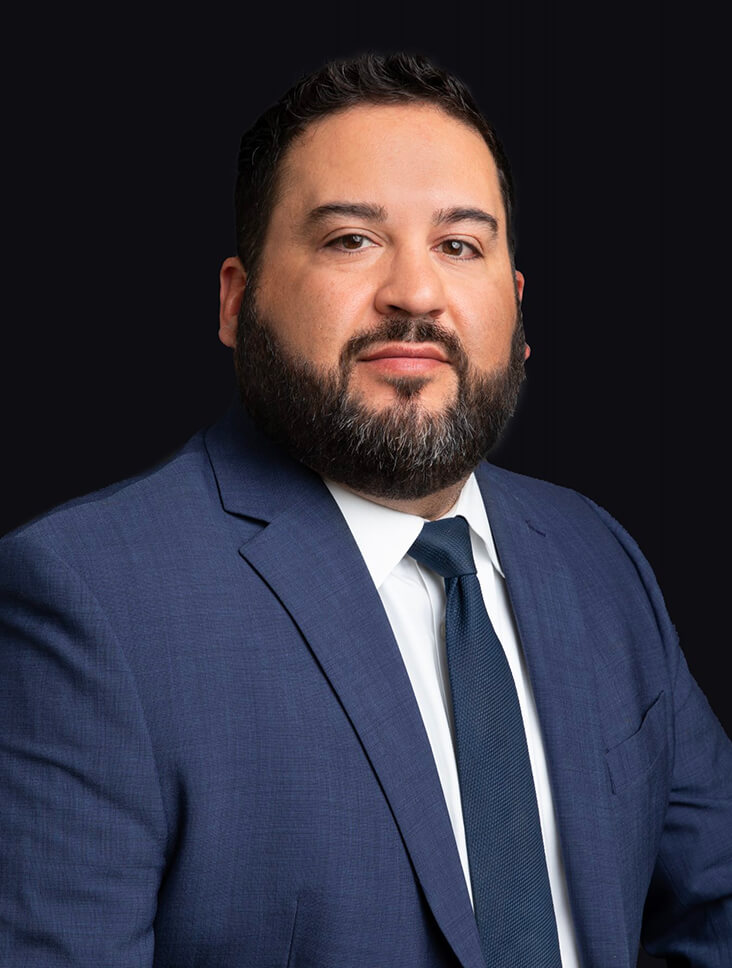
Senior Associate - Domestic Relations & Criminal Defense
Fort Collins
Miguel C. Mondragon is a tenacious and dedicated attorney who is fiercely committed to his clients and their legal outcomes. Recognizing that clients facing divorce or criminal charges are often in their most vulnerable state, Miguel acts as a passionate advocate, ensuring they have a voice within the legal system. Growing up in southern Colorado, Miguel developed a strong work ethic by working in construction, lumber, and brickyards while attending college. Before becoming an attorney, his interest in law was sparked by his work within the Larimer County Corrections system. While attending the University of South Dakota School of Law, he gained valuable experience working with East River Legal Services, the Colorado State Public Defenders Office, and Samuelson Law. Upon graduation, Miguel honed his skills first as a solo practitioner, then at Weaver & Associates, P.C., before founding Mondragon Law, where he specialized in criminal defense and family law. He brings this deep experience and tenacity to his current role...
Drug Laws in Colorado
Colorado’s Drug Code classifies controlled substances into five schedules. Under Colorado’s SB 19-013 reforms, simple possession of most Schedule I or II substances for a first or second offense is a level 1 drug misdemeanor — carrying up to 180 days in jail with treatment alternatives available. A third or subsequent possession offense can be charged as a level 4 drug felony. Distribution, manufacturing, and trafficking remain felonies at every level regardless of the defendant’s prior record, with sentences from level 4 drug felony (6 months to 2 years) to level 1 drug felony (8 to 32 years) depending on the substance and quantity involved.
Marijuana is legal in Colorado for adults 21 and over in amounts up to one ounce. Denver has its own social consumption licensing framework that allows cannabis use in certain permitted venues — further embedding cannabis consumption into Denver’s social culture. Despite this legal landscape, marijuana-related criminal offenses still arise: possession above the legal limit, distribution without a license, sale to minors, use in a vehicle, and use in locations that are not permitted for social consumption all remain criminal offenses.
Denver’s position at the I-25/I-70 interchange — two of the most heavily traveled interstates in the Mountain West — makes it a significant node in drug trafficking networks. Colorado State Patrol and Denver Police conduct active drug interdiction on these corridors, and trafficking cases arising from Denver highway stops generate serious felony charges prosecuted by the Denver DA’s office. These cases are built almost entirely on traffic stop evidence, making Fourth Amendment suppression of that evidence the primary defense tool.
What Our Denver Drug Defense Attorneys Challenge
Fourth Amendment traffic stop and search: Denver drug trafficking and distribution cases are built on physical drug evidence obtained through traffic stops. That evidence must have been obtained through a constitutionally valid stop, detention, and search. Unlawful stops, unlawful extended detentions beyond the Rodriguez framework, and coerced or invalid consent to search all require suppression of the resulting drug evidence. Suppression of the drugs typically ends the prosecution. We scrutinize every Denver drug stop for Fourth Amendment violations from the moment we are retained.
I-25 and I-70 corridor constitutional issues: Drug enforcement on I-25 and I-70 through Denver generates specific Fourth Amendment issues — extended detentions beyond the traffic stop’s mission, drug dog deployment, consent search requests in a highway stop environment — that we handle with the depth they require in Denver District Court.
Denver Police search issues: Drug evidence obtained through Denver Police searches of residences, vehicles, and persons must comply with Fourth Amendment requirements. Search warrants must be supported by probable cause; warrant exceptions must actually apply. We challenge the factual and legal basis for Denver Police searches in every drug case where those issues exist.
Laboratory analysis and chain of custody: Drug evidence must be properly collected, documented, stored, and tested. Chain of custody failures and laboratory methodology deficiencies affect admissibility in Denver District Court and Denver County Court. We review complete documentation in every Denver drug case.
Denver Drug Court eligibility: For eligible Denver drug defendants, Denver Drug Court provides a genuine alternative to conventional prosecution. Identifying eligibility and advocating effectively for Drug Court acceptance is one of the most important defense moves on an appropriate Denver drug case.
Denver Drug Court
Denver Drug Court is one of Colorado’s most established and developed drug specialty courts, operating within the 2nd Judicial District. The program provides intensive treatment, frequent court appearances, regular drug monitoring, and graduated responses to compliance issues as an alternative to conventional prosecution for eligible drug offense defendants. Successful completion of Denver Drug Court avoids a conviction on the criminal record — a genuinely meaningful outcome.
Denver Drug Court eligibility requires an assessment of the defendant’s substance use history, the nature of the charges, and the defendant’s willingness to engage in intensive treatment. The program is not a simple path — it requires substantial commitment and active participation over an extended period. But for defendants who genuinely need treatment and are willing to commit to the program, Drug Court provides outcomes — both in terms of substance use and criminal record — that conventional prosecution cannot match.
Completion of Denver Drug Court also creates record sealing eligibility after applicable waiting periods under Colorado’s record sealing statutes. This long-term benefit — a clean record after completing a treatment program — is one of the significant advantages of Drug Court over conventional prosecution and plea, and it is part of the complete analysis we present to Drug Court-eligible clients when evaluating their options.
Why Burnham Law for Drug Defense in Denver
Fourth Amendment suppression depth. Drug cases are built on physical evidence. We file thorough, well-researched suppression motions in every Denver drug case with constitutional issues — calibrated to how Denver District Court judges evaluate Fourth Amendment arguments — and we achieve suppression results with enough regularity that opposing counsel evaluates our cases differently because of it.
Denver Drug Court expertise. Denver Drug Court is one of Colorado’s most developed specialty courts. We know the program, its eligibility criteria, and how to advocate effectively for our clients’ acceptance. Drug Court eligibility evaluation is part of our assessment of every Denver drug case.
I-25/I-70 corridor trafficking defense. Drug trafficking cases from Denver’s highway corridors have specific Fourth Amendment characteristics — traffic stop validity, Rodriguez extended detention issues, consent search analysis — that we handle with the constitutional depth these cases require in Denver’s courts.
Cannabis offense distinction. Denver’s cannabis culture means marijuana-related criminal offenses arise in specific patterns — above-limit possession, unlicensed distribution, vehicle consumption — that require specific knowledge of where the lines are drawn between legal and criminal conduct in Denver’s cannabis regulatory environment.
Frequently Asked Questions — Denver Drug Offenses
Does Denver’s cannabis legalization mean drug charges are treated more leniently?
Colorado’s cannabis legalization does not translate to lenient prosecution of drug distribution, trafficking, or serious possession cases in Denver. The Denver DA’s office actively prosecutes drug distribution and trafficking regardless of the substance involved. What Denver offers for appropriate simple possession defendants is meaningful alternatives to conventional prosecution — particularly Denver Drug Court — that can avoid conviction. But distribution and trafficking charges are prosecuted aggressively in the 2nd Judicial District, and cannabis-related distribution charges are treated the same as other drug distribution charges.
What is Denver Drug Court and who is eligible?
Denver Drug Court is a specialty court within the 2nd Judicial District offering intensive treatment and supervision as an alternative to conventional prosecution for eligible drug offense defendants. Eligibility requires an assessment of the defendant’s substance use history, criminal history, the nature of the charges, and willingness to participate in intensive treatment. The program involves frequent court appearances, drug monitoring, and graduated responses to compliance issues over an extended period — typically 12 to 18 months or more. Successful completion avoids a conviction. We evaluate Drug Court eligibility at the outset of every Denver drug case and advocate effectively for our clients’ acceptance into the program.
What are the most common Fourth Amendment issues in Denver drug stops?
The most common Fourth Amendment issues we challenge in Denver drug cases include: unlawful traffic stops where the officer lacked reasonable articulable suspicion of a traffic violation or criminal activity; extended detentions on I-25 or I-70 beyond the scope of the original stop without independent reasonable suspicion, in violation of Rodriguez v. United States; coerced consent to search in a highway stop environment where drivers feel they cannot refuse; unlawful deployment of drug-detection dogs without adequate supporting suspicion; and unlawful searches of Denver residences where the warrant or exception did not justify the search scope.
Can a Denver drug charge be dismissed or diverted?
Yes. Denver drug charges are dismissed through successful Fourth Amendment suppression of the drug evidence, through successful completion of Denver Drug Court or other diversion programs, through the DA’s determination that evidence is insufficient, and through acquittal at trial. For eligible first-time possession defendants, Drug Court or standard diversion leading to dismissal is a realistic and frequently achieved outcome with experienced Denver drug defense counsel. The specific path depends on the charge, the facts of the search and arrest, and the defendant’s history.
How does a Denver drug conviction affect professional licensing?
Drug convictions can affect professional licenses across many Denver industries — healthcare, law, education, financial services, technology, and social services all have licensing boards that evaluate criminal convictions. The specific impact depends on the profession, the nature of the conviction, and whether it involved distribution or possession. Some convictions trigger mandatory reporting with immediate effect; others are evaluated case by case. Denver’s large and diverse professional community means drug conviction licensing consequences affect a significant portion of defendants we represent. We advise clients on these consequences and structure defense strategy to minimize them.
Schedule a Consultation with a Denver Drug Offense Lawyer
Drug charges in Denver — from possession misdemeanors to I-25 trafficking felonies — require experienced defense that understands both the constitutional issues and the specific opportunities Denver’s court system offers. Burnham Law’s Denver drug defense attorneys are ready to evaluate your case and pursue the best available outcome.
Call (303) 990-5308 or schedule a confidential consultation online. We defend drug charges throughout Denver County District Court and Denver County Court.