

Cherry Creek Restraining Order Lawyers – Denver Court Advocacy
Immediate Protection & Strategic Defense in the 2nd Judicial District
In Cherry Creek, a restraining order (formally a Civil Protection Order) is a high-velocity legal action typically initiated at the Denver County Court (1437 Bannock St). In 2026, these orders are no longer just safety measures; they are powerful legal instruments that trigger mandatory firearm relinquishment and serve as a “financial catalyst” in divorce proceedings under the SB 25-116 alimony reforms.
At Burnham Law, we specialize in the sophisticated intersection of family law and criminal defense. Whether you are seeking protection from “coercive control” or defending against a bad-faith petition designed to gain leverage in a custody battle, we provide the elite, trial-ready advocacy needed to navigate the Lindsey-Flanigan Courthouse with your rights and reputation intact.
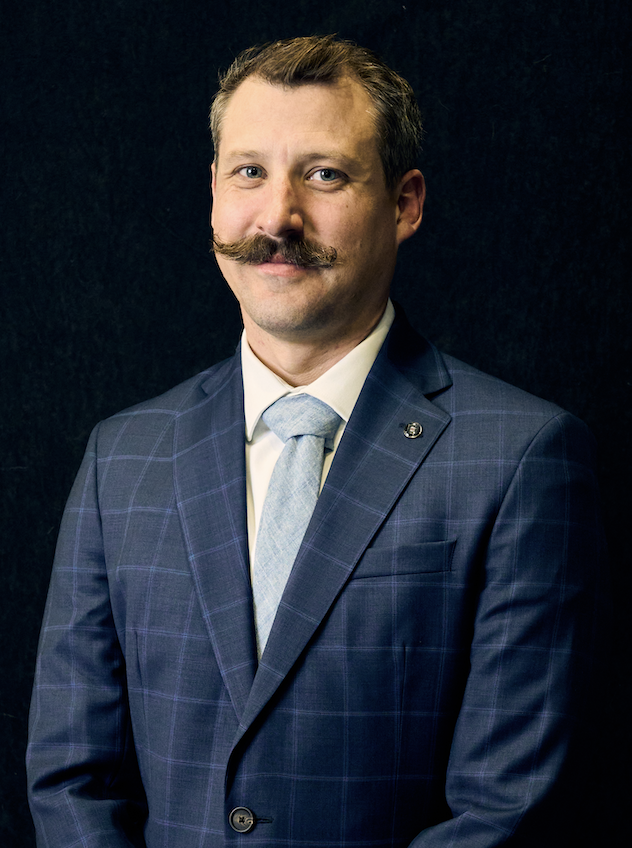
Partner - Domestic Relations and Criminal Defense
Colorado Springs
Jeremy Wooten, is a seasoned trial attorney who specializes in criminal defense and family law, leveraging a wealth of experience honed over five years at the Colorado State Public Defenders’ Office. Rising to Senior Deputy Public Defender, he successfully managed a diverse caseload, including serious charges like first-degree homicide, drug distribution, and economic crimes, always maintaining an unwavering commitment to client advocacy. Licensed in both Texas and Colorado, Jeremy's legal expertise is defined by strategic planning—meticulously crafting and executing well-thought-out trial strategies—and remarkable resourcefulness in finding innovative solutions to complex legal challenges in both the criminal and family law arenas. His practice is characterized by agile, client-centered advocacy, which relies on adaptability, active listening, and quick thinking essential for effective trial work. Jeremy prioritizes thoroughly understanding his clients' objectives and adapting his strategies dynamically to the evolving nature of trials. His resilience and strategic agility allow him to confidently navigate unexpected developments in the courtroom, ensuring each case is expertly...

Senior Associate Attorney - Domestic Relations and Criminal Defense
Colorado Springs
Julian Rosielle has been licensed to practice law in Colorado since 2006. Julian is a graduate of the University of Colorado School of Law, where he was on the Dean’s List and an associate editor of the University of Colorado Law Review. Julian practiced exclusively in the area of criminal law for the first thirteen years of his career and has several notable case outcomes to include not guilty verdicts on charges of homicide and assault. Julian has extensive trial experience, ranging from Death Penalty cases to misdemeanor domestic violence to driving under the influence. Beginning in 2019, Julian’s practice has expanded to include domestic relations litigation and civil protection orders. Julian has lived in Colorado since 2004 and when not in Court enjoys hiking with his family and dogs.

Associate Attorney - Civil Litigation & Criminal Defense
Centennial
Kate strives to have a client-oriented practice where she can assist her clients in all stages of litigation. Prior to joining Burnham, Kate was an associate at an AmLaw Firm where she worked on various types of complex litigation representing large corporations, municipalities, and individuals. Before going into private practice, Kate was an Assistant Public Defender in Miami-Dade County where she tried over twenty cases. Kate has been able to develop a well-rounded practice by working in both the private and public sectors. Kate has honed her skill sets from her prior experience so she can be a zealous advocate for her clients. In her spare time, Kate enjoys spending time with her husband in the outdoors, traveling, and visiting family.
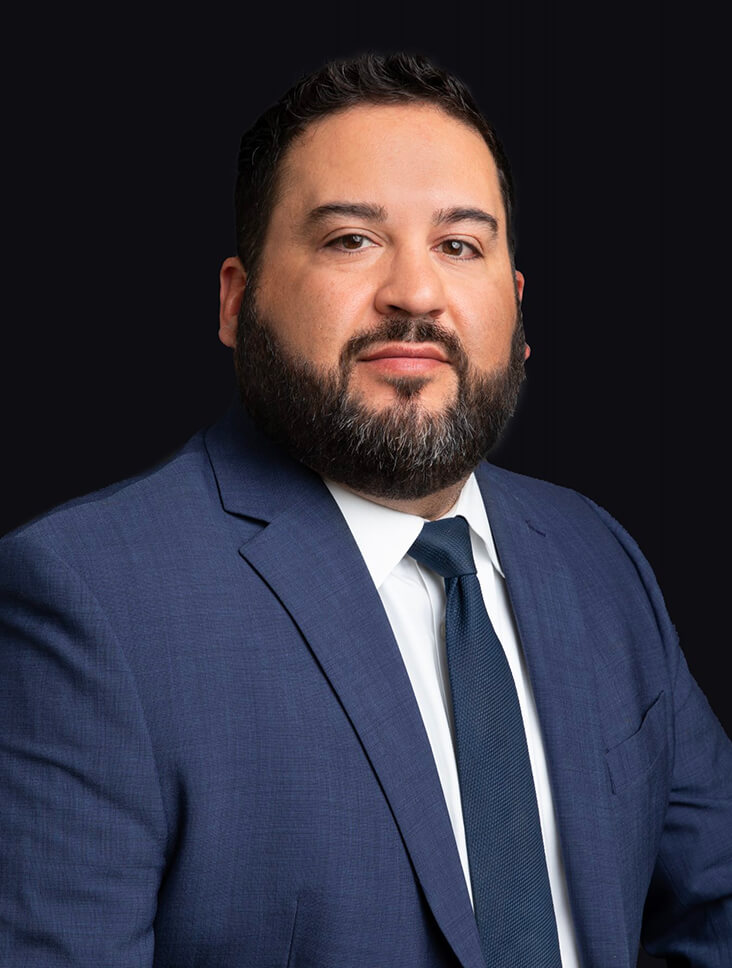
Senior Associate - Domestic Relations & Criminal Defense
Fort Collins
Miguel C. Mondragon is a tenacious and dedicated attorney who is fiercely committed to his clients and their legal outcomes. Recognizing that clients facing divorce or criminal charges are often in their most vulnerable state, Miguel acts as a passionate advocate, ensuring they have a voice within the legal system. Growing up in southern Colorado, Miguel developed a strong work ethic by working in construction, lumber, and brickyards while attending college. Before becoming an attorney, his interest in law was sparked by his work within the Larimer County Corrections system. While attending the University of South Dakota School of Law, he gained valuable experience working with East River Legal Services, the Colorado State Public Defenders Office, and Samuelson Law. Upon graduation, Miguel honed his skills first as a solo practitioner, then at Weaver & Associates, P.C., before founding Mondragon Law, where he specialized in criminal defense and family law. He brings this deep experience and tenacity to his current role...
2026 Legal Updates: The New Stakes of Protection Orders
The 2026 legal landscape in Denver has introduced landmark shifts in how protection orders are issued and their long-term consequences:
1. SB 25-116: The Alimony & “Coercive Control” Link
This 2025 law is now fully operational and a primary driver of 2026 Denver litigation:
-
The 5-Year Disclosure: Parties in a Denver divorce must now disclose any protection orders entered within the last 5 years (increased from 2 years).
-
Maintenance Bar: Judges in the 2nd District are now empowered to consider coercive control, economic abuse, and litigation abuse when determining spousal maintenance (alimony). A permanent protection order can now be used as a statutory basis to deny alimony to an abuser or increase the award for a survivor.
2. HB 26-1009: The Mandatory Lethality Assessment
Newly active in 2026, this bill mandates a specialized response from Denver law enforcement:
-
Evidence in Civil Court: Results from the Mandatory Lethality Assessment—an evidence-based screening used by officers at the scene—are now being introduced in Temporary Protection Order (TPO) hearings to justify stricter “no-contact” provisions and immediate residence exclusion.
-
Immediate Advocacy: Victims identified as “high-risk” under the 2026 assessment are now immediately connected to advocates at the Denver Family Justice Center.
3. HB 25-1148: Standardized Criminal Protection Orders
As of August 2026, new rules for criminal protection orders (issued during an arrest) mandate:
-
Mandatory Review: Courts must review the protection order at the time of sentencing or case resolution to determine if it should be modified or dismissed.
-
Substance Restrictions: The court can only prohibit alcohol or controlled substances if there is a documented nexus between the substance and the safety of the victim.
The Two-Step Process in Denver County Court
In the 2nd Judicial District, a Civil Protection Order follows a strict two-stage process:
Stage 1: The Temporary Protection Order (TPO)
-
The “Ex Parte” Hearing: In Denver, TPO paperwork must typically be turned in by 9:00 a.m. at the City & County Building (Room 159). The petitioner speaks to a judge without the other party present.
-
The Imminent Danger Standard: The court only needs to find that an act of violence or stalking occurred and that the petitioner is in imminent danger to grant the TPO.
-
Immediate Effect: Once served, the respondent may be required to immediately vacate a shared residence in Cherry Creek.
Stage 2: The Permanent Protection Order (PPO) Hearing
-
The 14-Day Clock: A full evidentiary hearing is usually scheduled within 14 days.
-
The Lifetime Stake: In Colorado, a protection order is permanent. It does not expire and can generally only be modified or dismissed after a minimum two-year waiting period.
-
The Burden of Proof: At this stage, the petitioner must prove by a preponderance of the evidence that the respondent committed the acts and will continue to be a threat unless restrained.
Firearm Relinquishment Rules (2026)
Denver courts strictly enforce C.R.S. 13-14-105.5 for any order involving domestic abuse:
-
24-Hour Rule: The respondent must relinquish all firearms and ammunition within 24 hours of being served.
-
The 2026 Affidavit: A signed affidavit memorializing the transfer to a law enforcement agency or a licensed dealer must be filed with the court within 7 business days.
-
Compliance Hearings: Denver judges now frequently schedule compliance reviews 8 to 12 days after the order to verify surrender under oath.
Why Choose Burnham Law for Your Case
In Cherry Creek, where personal and professional reputations are paramount, the outcome of a PPO hearing can dictate the next decade of your life. Burnham Law offers:
-
Strategic Dual Advocacy: We manage the “cross-talk” between your protection order and your SB 25-116 alimony case or custody battle.
-
Lethality Assessment Challenges: We aggressively challenge inflated “high-risk” designations by cross-examining officers on the administration of the new 2026 lethality tools.
-
The 28-Day Procedural Shield: In 2026, we strictly adhere to the 28-day window for seeking a District Court review of any magistrate’s order, protecting your right to appeal.
Take Action Today
The first 14 days after a Temporary Protection Order is issued are your only window to prevent a permanent mark on your record and a loss of your civil rights. Whether you are securing your safety or defending your reputation, immediate legal intervention is vital. Contact Burnham Law to schedule a strategic restraining order consultation: 📞 Call 303.990.5308 📍 Cherry Creek/Denver Office: 44 Cook St, Denver, CO 80206 📅 Schedule a Consultation Online